
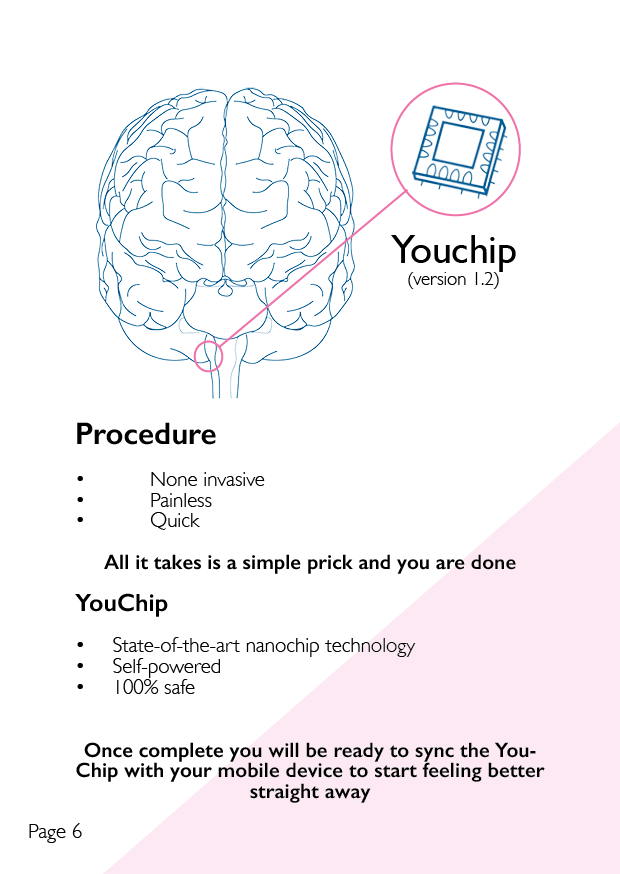
This master’s research project, Youtopia, is a speculative design exploration that critically examines the intersection of social media, biotechnology, and data-driven capitalism. Rather than proposing a product intended for immediate real-world deployment, the project imagines a near-future scenario in which an app is integrated with an implanted nanochip (“YouChip”) capable of stimulating the brain to enhance emotional wellbeing. On the surface, Youtopia presents itself as a solution to the growing global mental health crisis—offering connection, happiness, and self-optimisation through technologically mediated social interaction.
However, the project is deliberately designed to provoke discomfort and critical reflection. By mimicking familiar social media systems—such as likes, engagement loops, and community-building tools—Youtopia reveals how easily technologies framed as beneficial can embed systems of control, surveillance, and dependency. The addition of neurotechnology intensifies these concerns, shifting the stakes from behavioural influence to direct physiological and emotional manipulation.
At its core, Youtopia interrogates how gamification and platform design shape identity, behaviour, and self-worth within neoliberal digital culture. It questions whether the pursuit of happiness through technological enhancement risks eroding authentic human experience, autonomy, and the boundaries of the self. The project also engages with bioethical debates, particularly around the use of invasive technologies not for therapy but for enhancement, raising concerns about inequality, consent, and what it means to remain “human” in a technologically augmented world.
A key focus of the work is data ownership and control. By envisioning a system that collects not only behavioural data but also biological and neurological information, Youtopia exposes the extreme implications of current data economies. It asks: what are we willing to give up—privacy, agency, even bodily autonomy—in exchange for convenience, connection, and the promise of happiness? Furthermore, it highlights the risks of such technologies falling into the hands of corporations or institutions whose interests may not align with those of the user, including the potential for manipulation, exploitation, or misuse.
Ultimately, Youtopia functions as a critical lens through which to examine contemporary technological trajectories. It challenges viewers to look beyond the surface of innovation and question the hidden costs of convenience-driven design. By presenting a product that appears helpful and desirable, yet reveals troubling implications upon closer inspection, the project encourages deeper reflection on trust, power, and the future relationship between humans and technology.
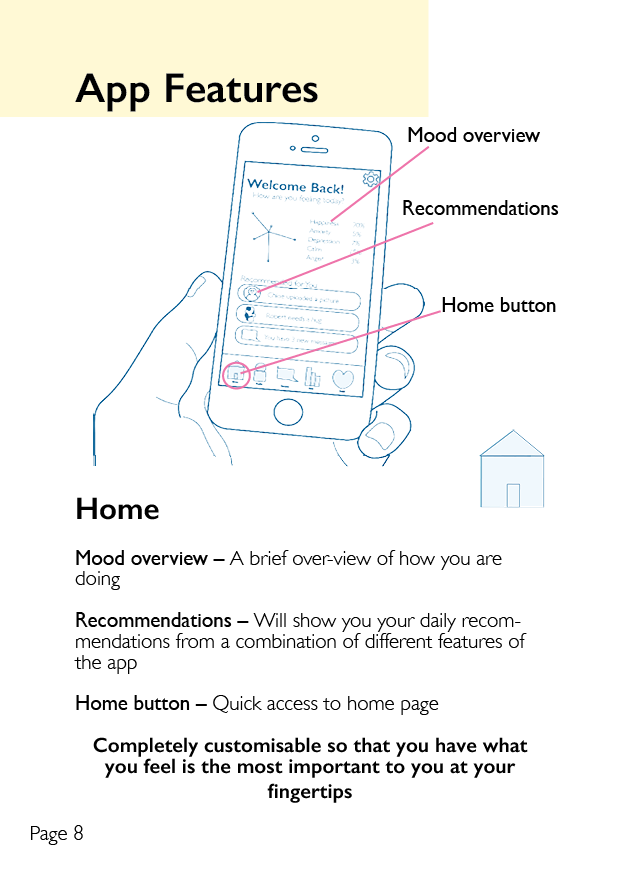
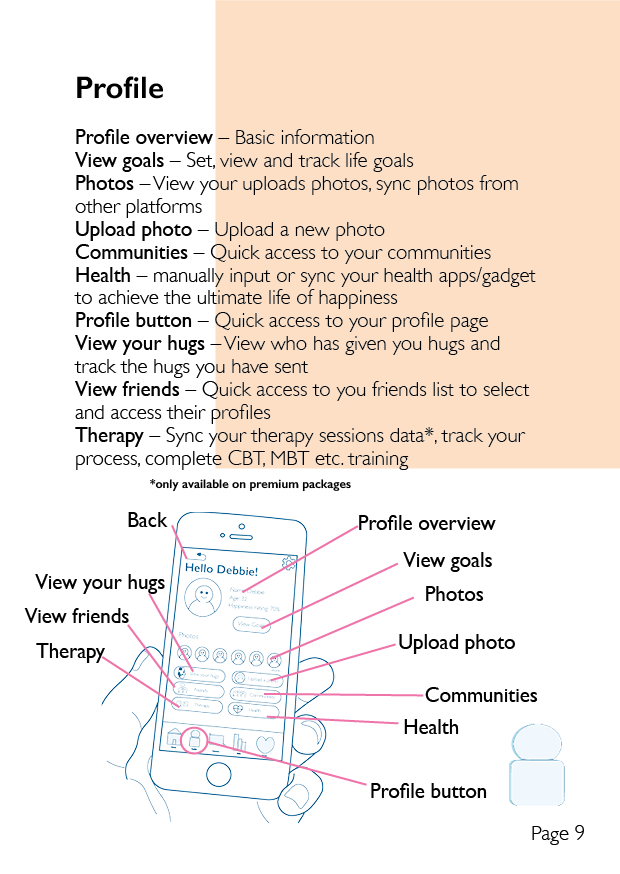
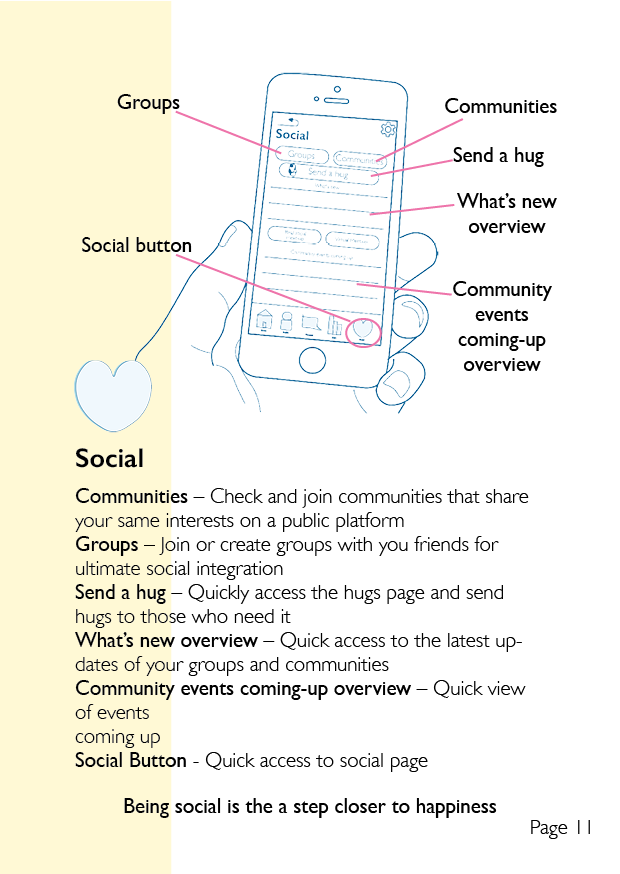
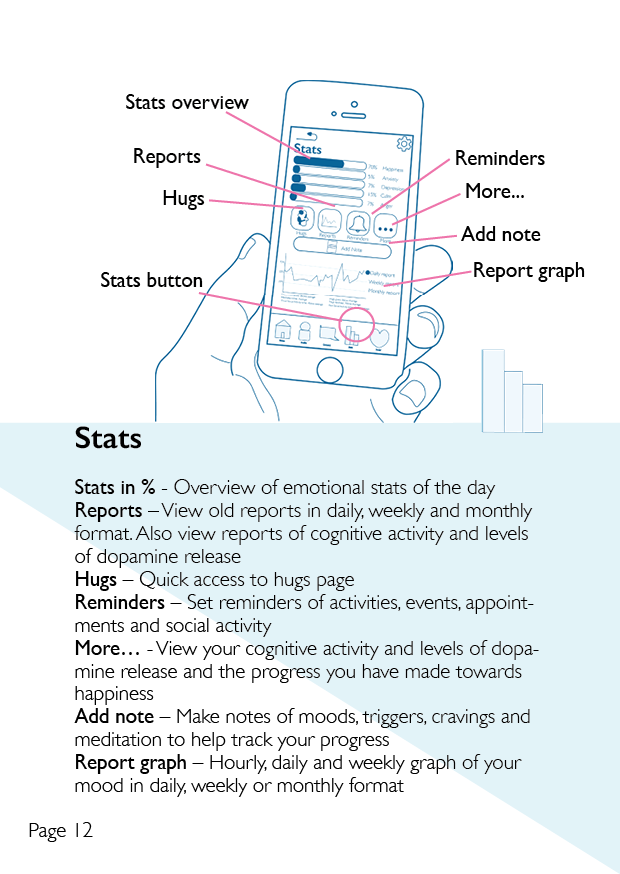
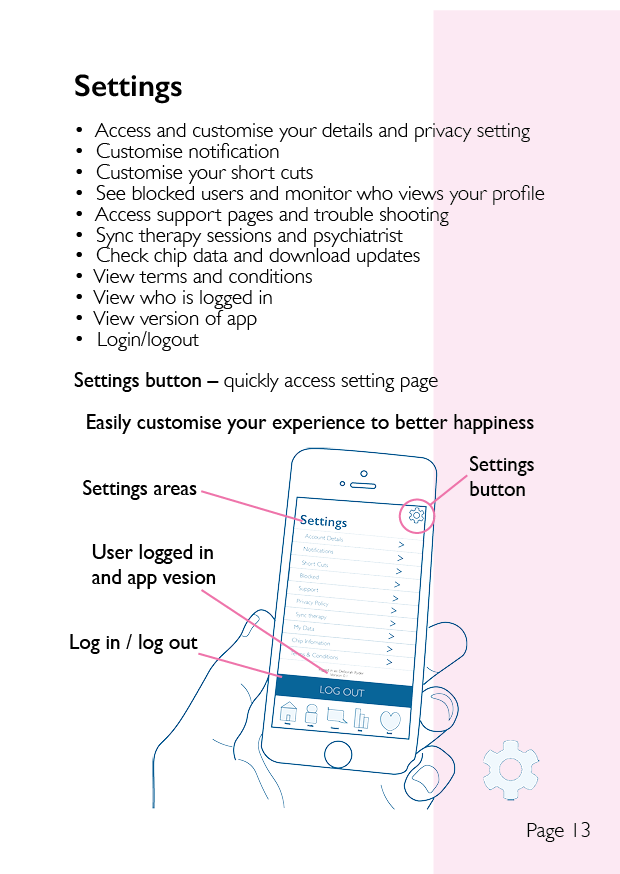
The brochure was designed to mimic a commercial product guide, presenting the device as if it were real while instructing users on its use alongside the app—thereby reinforcing the speculative narrative and encouraging viewers to question its implications.







An advertisement was developed to present the project as a real product, deliberately evoking a sense of wellbeing while drawing on the visual and narrative conventions of contemporary wellbeing marketing, in order to blur the line between genuine care and commercial persuasion.